Moving your laundry area can make your home more convenient. Maybe you’re creating a dedicated laundry room, remodeling a kitchen, or moving the washer and dryer into a closet or utility space.
But before choosing the new location, it’s important to consider the plumbing.
A washing machine needs a reliable water supply, a properly configured drain, and connections that remain accessible after the appliance is installed.
What Plumbing Does a Washing Machine Need?
Most standard washing machines require hot and cold water connections, although some models have different requirements.
These supply lines typically connect to shutoff valves located inside a washing machine hookup box or another accessible location.
The washing machine also needs a drain connection to carry wastewater away during each cycle.
When relocating a laundry area, existing pipes may need to be extended, rerouted, or replaced to reach the new location.
Why Install a Recessed Laundry Hookup Box?
A recessed washing machine outlet box provides a convenient location for the water supply valves and drain opening.
Instead of leaving several plumbing connections exposed behind the washer, the box keeps them organized within the wall.
Its benefits include:
Convenient access to hot and cold water shutoff valves
An organized location for the washing machine drain hose
A cleaner appearance behind the appliance
Easier access for future maintenance
Better use of the available space
The box should be positioned according to the appliance manufacturer’s requirements and applicable plumbing codes.
Can You Move a Washing Machine Anywhere?
Not necessarily.
While water supply lines can often be extended to a new location, drainage requirements can be more complicated.
A washing machine drain needs properly sized piping, an appropriate trap, venting, and a suitable connection to the existing drainage system.
The available wall space, pipe routing, and location of existing plumbing can all affect the feasibility and cost of the project.
It’s best to evaluate these details before finalizing the laundry room layout.
A Recent Laundry Hookup Installation in Los Angeles
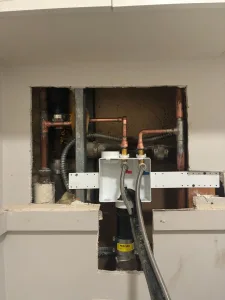
For a recent residential plumbing project, the existing wall connections needed to be modified to accommodate a new washing machine hookup box.
The work included modifying the existing copper hot and cold water supply lines, installing new rigid copper piping and fittings, and extending the existing drain connection.
A recessed laundry hookup box was installed to provide a convenient location for the washing machine connections.
After installation, the new plumbing connections were tested for leaks.
Plan the Plumbing Before Finishing the Walls
If you’re remodeling a laundry area, it’s generally easier to complete the necessary plumbing modifications before drywall, cabinetry, and other finishes are installed.
This allows the water lines, drain, and hookup box to be positioned correctly without unnecessary rework.
A little planning can make the final appliance installation simpler and help keep important connections accessible.
Final Thoughts
Relocating a washing machine may seem like a small part of a renovation, but the plumbing deserves careful attention.
A properly planned laundry hookup provides convenient access to the water supply, supports reliable drainage, and makes future maintenance easier.
Before moving your washer and dryer, check the available plumbing connections and make sure the new location can accommodate the required water supply and drainage systems.