Water pressure plays an important role in how a home’s plumbing system performs. While most homeowners notice low water pressure immediately, excessively high pressure can be less obvious.
Over time, excessive pressure can put unnecessary stress on water supply pipes, fittings, valves, faucets, and household appliances.
Working on the Water Supply System
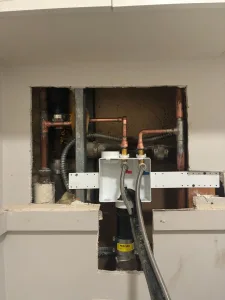
This project photo shows our plumber working on copper water supply piping and a brass valve assembly.
Work involving copper piping requires careful preparation, proper fitting selection, and secure connections. These details are especially important in water supply systems that operate under continuous pressure.
The photo also illustrates why some plumbing improvements are more about long-term reliability than visible changes inside the home.
Why Water Pressure Matters
Water pressure affects nearly every fixture connected to a home’s water supply.
When pressure is too low, showers and faucets may not perform as expected.
When pressure is too high, plumbing components experience additional stress that can contribute to premature wear and leaks.
For residential plumbing systems, pressure around 50–60 PSI is often a comfortable operating range. Under California plumbing requirements, water pressure exceeding 80 PSI generally requires pressure regulation.
What Does a Pressure Regulator Do?
A pressure-reducing valve, commonly called a PRV, reduces incoming water pressure to a more appropriate level for the home’s plumbing system.
A properly selected and adjusted regulator can help:
Reduce excessive pressure on plumbing connections
Protect faucets, valves, and appliances from unnecessary stress
Maintain more consistent water pressure
Support the long-term reliability of the water supply system
Pressure regulators should be selected and installed according to the specific plumbing system and local requirements.
Signs Your Water Pressure May Need Attention
Some common reasons to check your home’s water pressure include:
Water flow that seems unusually forceful
Frequent leaks at faucets or plumbing connections
Banging or noisy pipes
Repeated problems with toilet fill valves
Noticeable changes in water pressure
These symptoms can have several causes, so measuring the actual pressure is an important first step.
Water Pressure Testing and Plumbing Repairs in Los Angeles
A basic pressure test can help determine whether incoming water pressure is within an appropriate range.
Depending on the results and the condition of the plumbing system, the solution may involve adjusting or replacing a pressure regulator, repairing deteriorated connections, or addressing another water supply issue.
Pacific Plumbing Team provides residential water pressure testing, pressure regulator installation, copper pipe repairs, and water supply plumbing services throughout Los Angeles, Redondo Beach, Santa Monica, Culver City, Beverly Hills, and surrounding communities.