Water Pressure Regulator and Copper Pipe Work in Los Angeles

Water pressure plays an important role in how a home’s plumbing system performs. While most homeowners notice low water pressure immediately, excessively high pressure can be less obvious.

Over time, excessive pressure can put unnecessary stress on water supply pipes, fittings, valves, faucets, and household appliances.

Working on the Water Supply System

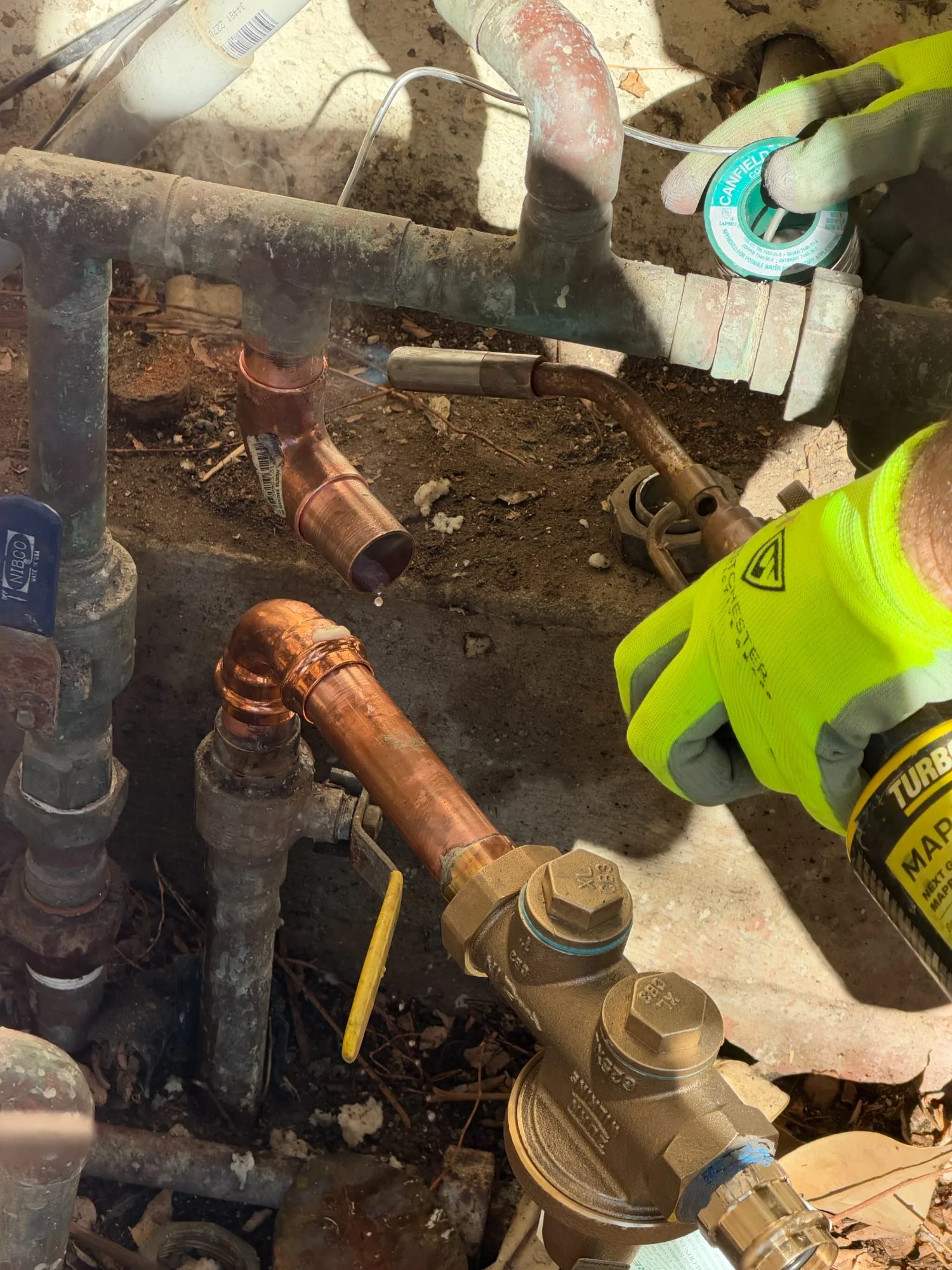
This project photo shows our plumber working on copper water supply piping and a brass valve assembly.

Work involving copper piping requires careful preparation, proper fitting selection, and secure connections. These details are especially important in water supply systems that operate under continuous pressure.

The photo also illustrates why some plumbing improvements are more about long-term reliability than visible changes inside the home.

Why Water Pressure Matters

Water pressure affects nearly every fixture connected to a home’s water supply.

When pressure is too low, showers and faucets may not perform as expected.

When pressure is too high, plumbing components experience additional stress that can contribute to premature wear and leaks.

For residential plumbing systems, pressure around 50–60 PSI is often a comfortable operating range. Under California plumbing requirements, water pressure exceeding 80 PSI generally requires pressure regulation.

What Does a Pressure Regulator Do?

A pressure-reducing valve, commonly called a PRV, reduces incoming water pressure to a more appropriate level for the home’s plumbing system.

A properly selected and adjusted regulator can help:

  • Reduce excessive pressure on plumbing connections

  • Protect faucets, valves, and appliances from unnecessary stress

  • Maintain more consistent water pressure

  • Support the long-term reliability of the water supply system

Pressure regulators should be selected and installed according to the specific plumbing system and local requirements.

Signs Your Water Pressure May Need Attention

Some common reasons to check your home’s water pressure include:

  • Water flow that seems unusually forceful

  • Frequent leaks at faucets or plumbing connections

  • Banging or noisy pipes

  • Repeated problems with toilet fill valves

  • Noticeable changes in water pressure

These symptoms can have several causes, so measuring the actual pressure is an important first step.

Water Pressure Testing and Plumbing Repairs in Los Angeles

A basic pressure test can help determine whether incoming water pressure is within an appropriate range.

Depending on the results and the condition of the plumbing system, the solution may involve adjusting or replacing a pressure regulator, repairing deteriorated connections, or addressing another water supply issue.

Pacific Plumbing Team provides residential water pressure testing, pressure regulator installation, copper pipe repairs, and water supply plumbing services throughout Los Angeles, Redondo Beach, Santa Monica, Culver City, Beverly Hills, and surrounding communities.
Trenchless Sewer Pipe Lining in Los Angeles | Sewer Rehabilitation

Underground sewer line repairs don’t always require extensive digging. Modern trenchless rehabilitation methods can sometimes restore an existing sewer pipe while leaving much of the surrounding property undisturbed.

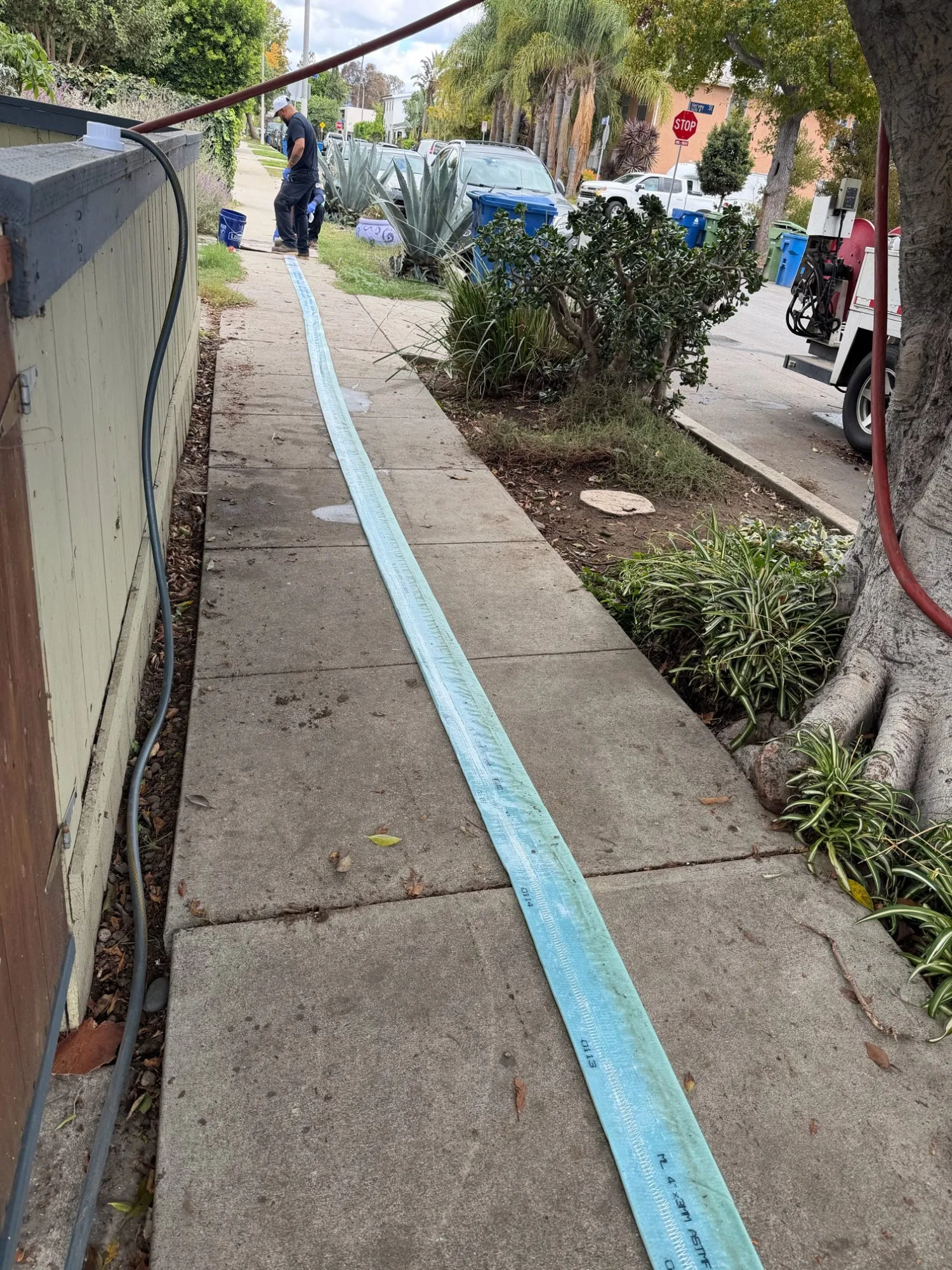
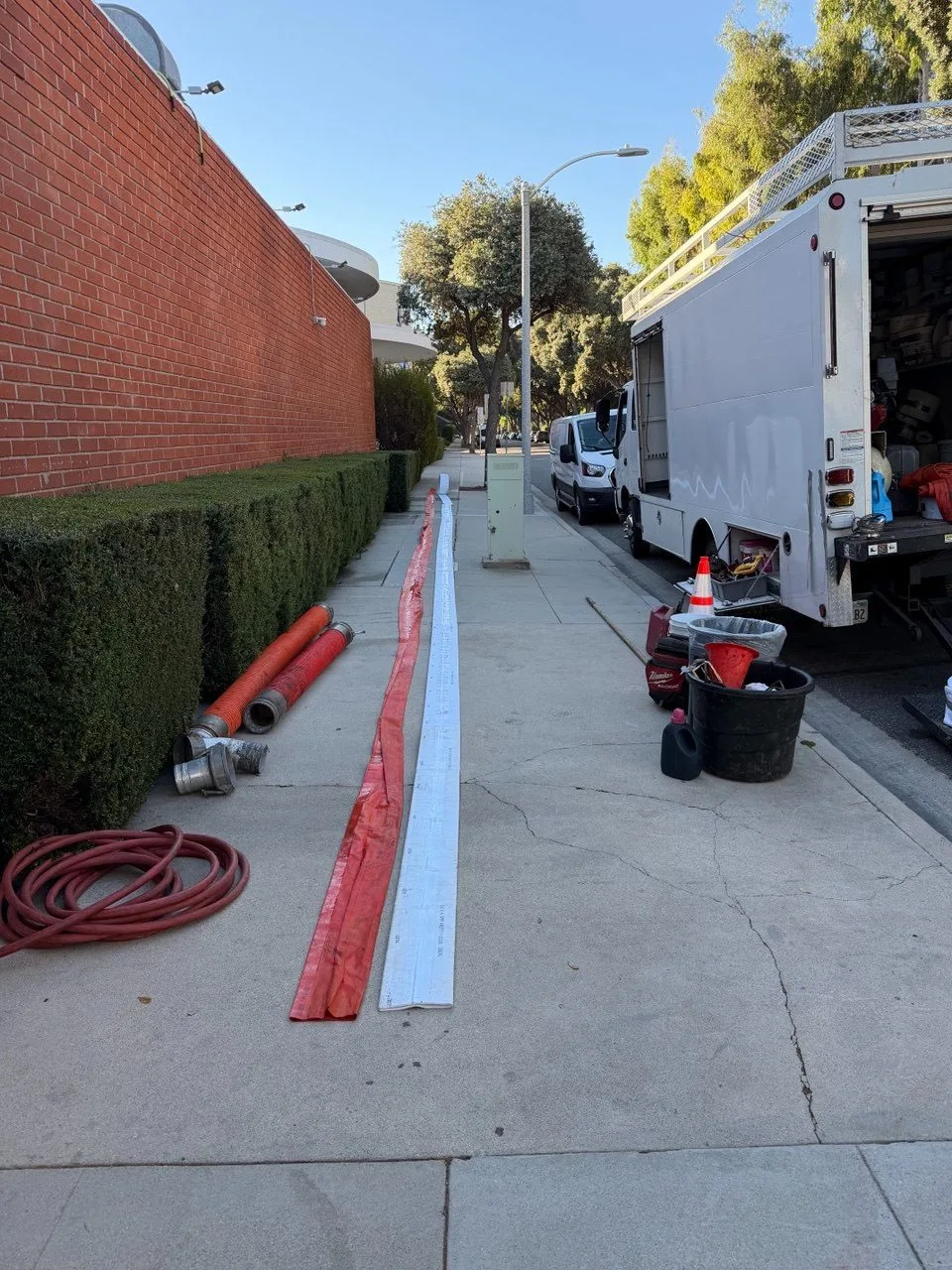
For this Los Angeles project, our team prepared specialized pipe-lining materials and equipment for sewer rehabilitation work.

What Is Trenchless Sewer Pipe Lining?

Trenchless pipe lining is a method of rehabilitating an existing underground pipe without excavating its entire length.

One common technique is cured-in-place pipe lining, also known as CIPP.

This method uses a resin-saturated liner that is inserted into the existing sewer pipe. After positioning and curing, the liner forms a new interior pipe surface.

The method can reduce the amount of excavation required compared with traditional pipe replacement.

Preparing for a Pipe-Lining Project

Successful sewer rehabilitation starts with understanding the condition of the existing pipe.

A sewer camera inspection can help identify issues such as:

  • Cracks and deteriorated pipe sections

  • Root intrusion

  • Corrosion and aging pipe materials

  • Misaligned or damaged connections

  • Areas of recurring blockage

Before lining, the existing pipe generally needs to be cleaned and prepared so the liner can be installed correctly.

The photograph from this project shows lining materials and specialized equipment staged at the work site.

Why Homeowners Consider Trenchless Sewer Repair

One of the biggest advantages of trenchless rehabilitation is the potential to reduce excavation.

Depending on the location and condition of the sewer line, conventional replacement may require digging through landscaping, walkways, or other finished areas.

Trenchless pipe lining may offer several benefits:

Less Excavation

In suitable conditions, the existing pipe can be rehabilitated using access points rather than exposing the entire underground line.

Reduced Property Disruption

Limiting excavation can help preserve landscaping and other surrounding surfaces.

A New Interior Pipe Surface

The cured liner creates a new interior surface within the existing pipe, helping address certain types of pipe deterioration and defects.

Long-Term Sewer Rehabilitation

When properly designed and installed, pipe lining can provide a durable repair solution for eligible sewer systems.

Is Every Sewer Line Suitable for Lining?

No. Trenchless pipe lining is not appropriate for every sewer problem.

A severely collapsed pipe, major displacement, or other structural conditions may require excavation or replacement.

That’s why inspecting the existing sewer line is an important part of choosing the right repair method.

A professional evaluation helps determine whether cleaning, spot repair, trenchless rehabilitation, or conventional replacement is the most appropriate solution.

Sewer Line Inspection and Repair in Los Angeles

Underground sewer problems can develop gradually, sometimes appearing as recurring drain clogs, slow drainage, or sewer backups.

Understanding the condition of the pipe before choosing a repair method can help homeowners avoid unnecessary work.

Pacific Plumbing Team provides sewer camera inspections, drain cleaning, trenchless sewer rehabilitation, and sewer line repair services throughout Los Angeles and surrounding communities, including Santa Monica, Culver City, Beverly Hills, and Redondo Beach.

Washing Machine Hookup Installation in Los Angeles

A convenient laundry area starts with properly positioned plumbing connections. For this residential project in Los Angeles, our team was called to prepare the existing plumbing for a new washing machine hookup.

The goal was to install a recessed laundry outlet box with accessible hot and cold water connections and connect it to the existing drainage system.

Preparing the Existing Plumbing

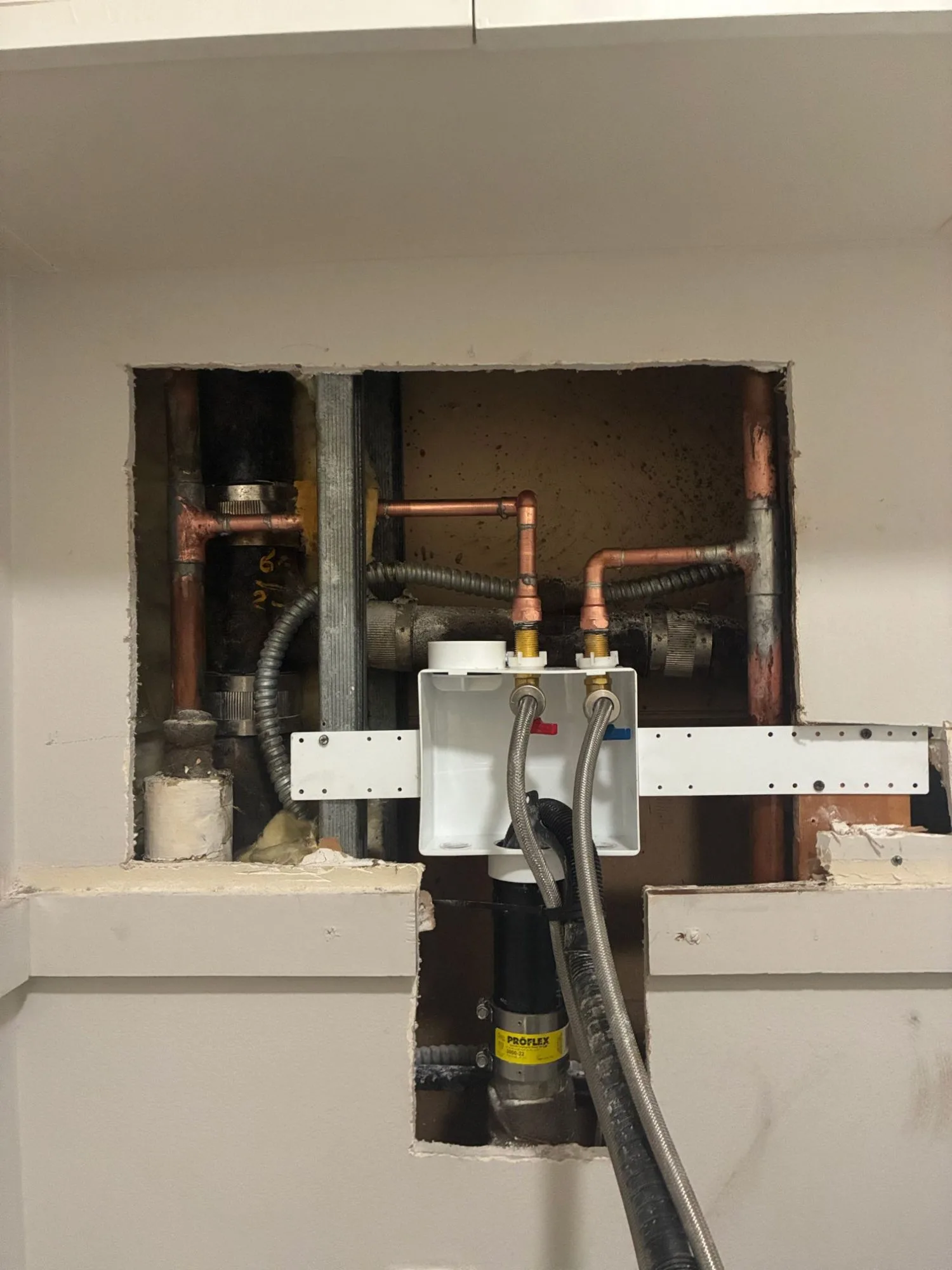
When our technicians opened the wall and inspected the existing plumbing, they found that the hot and cold water lines were connected through flexible copper supply tubing.

To accommodate the new washing machine hookup box, the existing water lines needed to be modified.

The project also required extending an older galvanized drain connection to reach the new laundry box.

Working within the existing wall space meant carefully planning the pipe routing around the existing plumbing and structural components.

Installing the New Water Supply Connections

Our team modified the existing 1/2-inch copper water supply lines to provide dedicated hot and cold connections for the washing machine.

The work included:

  • Modifying the existing copper supply lines

  • Installing new copper tees and rigid Type L copper piping

  • Connecting the hot and cold water lines to the recessed laundry box

  • Installing accessible washing machine shutoff valves

  • Securing the new piping within the wall

The recessed hookup box keeps the water connections organized and provides convenient access to the shutoff valves once the laundry area is finished.

Connecting the Washing Machine Drain

In addition to the water supply modifications, the existing drain piping needed to be extended.

Our technicians connected new ABS drain piping to the existing galvanized drainage system using appropriate transition fittings.

The new drain connection was routed to the washing machine outlet box to accommodate the appliance’s discharge hose.

This step is particularly important because washing machines discharge a significant amount of water during their drain cycles. Proper drain sizing, connections, and routing are essential for reliable operation.

Testing the New Plumbing

After completing the installation, our technicians restored the water supply and checked the new connections for leaks.

The completed installation was tested, and no leaks were found at the new connections.

The new recessed washing machine hookup box was ready for the next stage of the laundry area installation.

The Result: A More Convenient Laundry Setup

With the new plumbing connections installed, the homeowner now has a dedicated washing machine hookup location.

The recessed box provides an organized arrangement for the hot and cold water shutoff valves and the washing machine drain connection.

By modifying the existing plumbing rather than leaving the connections in their original positions, our team helped prepare the space for a more practical laundry setup.

Laundry Room Plumbing in Los Angeles

Laundry room renovations often require more than simply moving appliances.

Depending on the existing plumbing layout, a project may involve relocating water supply lines, modifying drain connections, installing washing machine outlet boxes, or replacing older piping.

This Los Angeles project is one example of how relatively small plumbing modifications can make a home improvement project more convenient.

At Pacific Plumbing Team, we handle washing machine hookup installations, laundry plumbing modifications, water line relocations, and residential plumbing upgrades throughout Los Angeles and surrounding communities.

Toilet Replacement: Why Proper Installation Matters

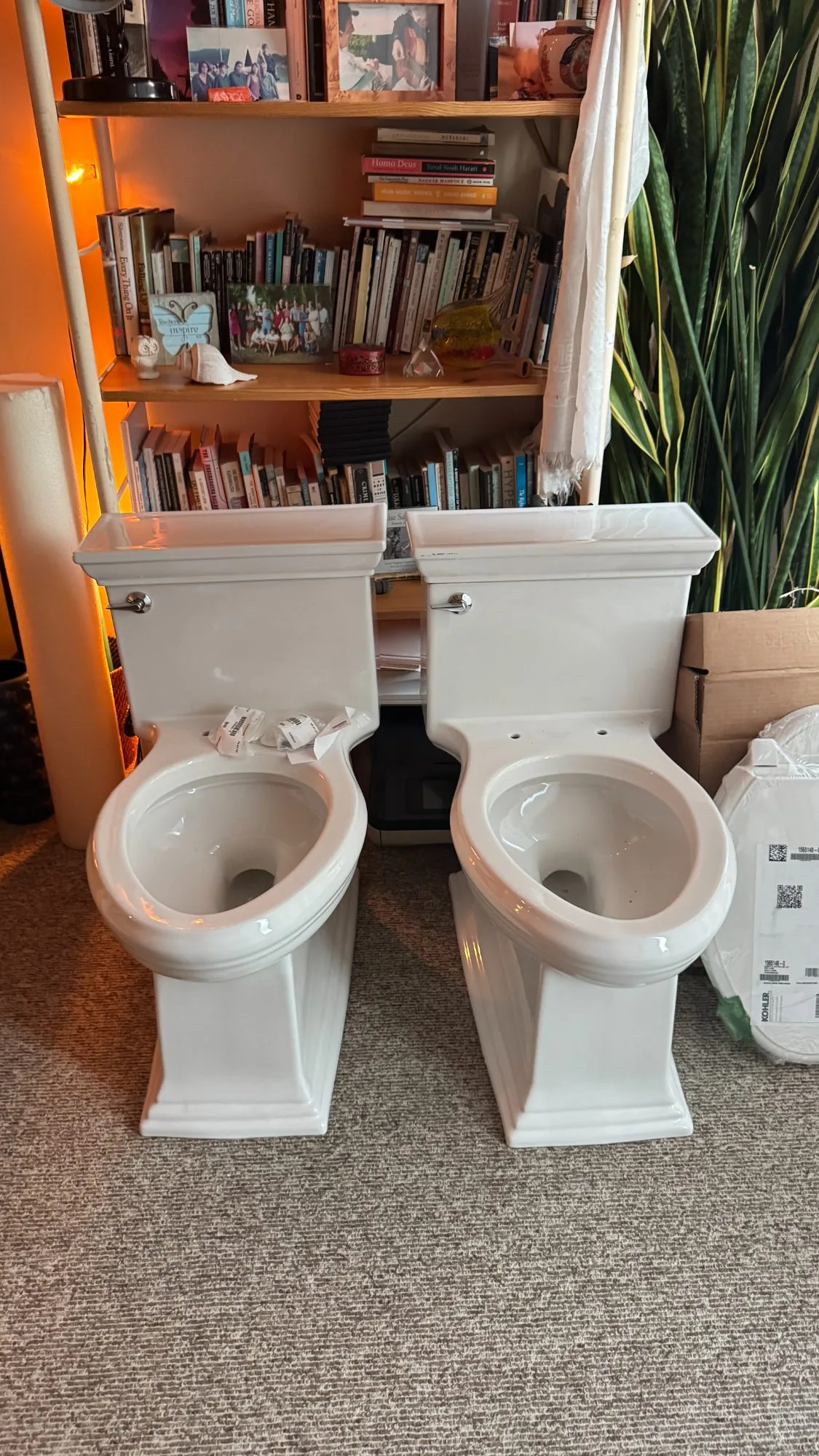
Not every plumbing project starts with an emergency. Sometimes homeowners simply want to refresh their bathroom, replace an outdated fixture, or install a more comfortable and efficient toilet.

Toilet replacement is one of the most common bathroom plumbing upgrades. While it may seem like a straightforward job, several important details can affect how well the new toilet performs over time.

It’s More Than Just Swapping Toilets

A proper toilet installation starts with checking the existing plumbing connections and the condition of the toilet flange.

The old toilet needs to be removed carefully, and the existing wax ring or other seal must be replaced. The new toilet should sit securely on the floor without rocking.

The water supply connection also needs attention. Older supply lines and shutoff valves may show signs of wear, making replacement worth considering during the installation.

Why Proper Installation Matters

Even a small installation mistake can lead to problems later.

An improperly sealed toilet can allow wastewater to leak around the base. Loose mounting can cause movement that damages the seal. Poorly connected water supply fittings may develop leaks.

Some leaks are immediately visible, while others can go unnoticed and gradually damage the flooring or subfloor.

Taking the time to check these details helps reduce the risk of future repairs.

When Should You Replace Your Toilet?

A toilet doesn’t necessarily need to be broken before you replace it.

Homeowners often choose a new toilet because they want:

  • A more modern bathroom appearance

  • Improved flushing performance

  • Better water efficiency

  • A more comfortable bowl height

  • A replacement for an aging or damaged fixture

A new toilet can be a relatively simple way to improve a bathroom without undertaking a complete renovation.

Can You Install a Toilet Yourself?

Many homeowners can handle a straightforward toilet replacement if the existing flange, flooring, shutoff valve, and drain are in good condition.

However, installation becomes more complicated when the flange is damaged, the floor is uneven, the shutoff valve leaks, or the new toilet doesn’t fit the existing layout.

If you’re unsure about the condition of the plumbing connections, having the installation checked by a professional can help prevent avoidable problems.

Final Thoughts

Bathroom improvements don’t always need to involve major remodeling.

Replacing an old toilet can be a practical upgrade, especially when the existing fixture is inefficient, uncomfortable, or showing signs of wear.

Whatever model you choose, proper installation is just as important as the toilet itself. A secure, properly sealed installation helps protect your bathroom and keeps everything working as expected.

High Water Pressure: A Hidden Plumbing Problem in Los Angeles Homes

Most homeowners know what low water pressure feels like. The shower barely flows, the kitchen faucet takes forever to fill a pot, and running two fixtures at once becomes frustrating.

But what about water pressure that’s too high?

Excessive water pressure is a common plumbing concern that can go unnoticed because everything seems to work perfectly well. In fact, stronger pressure can initially feel like an improvement.

Unfortunately, it can also put unnecessary stress on your home’s plumbing system.

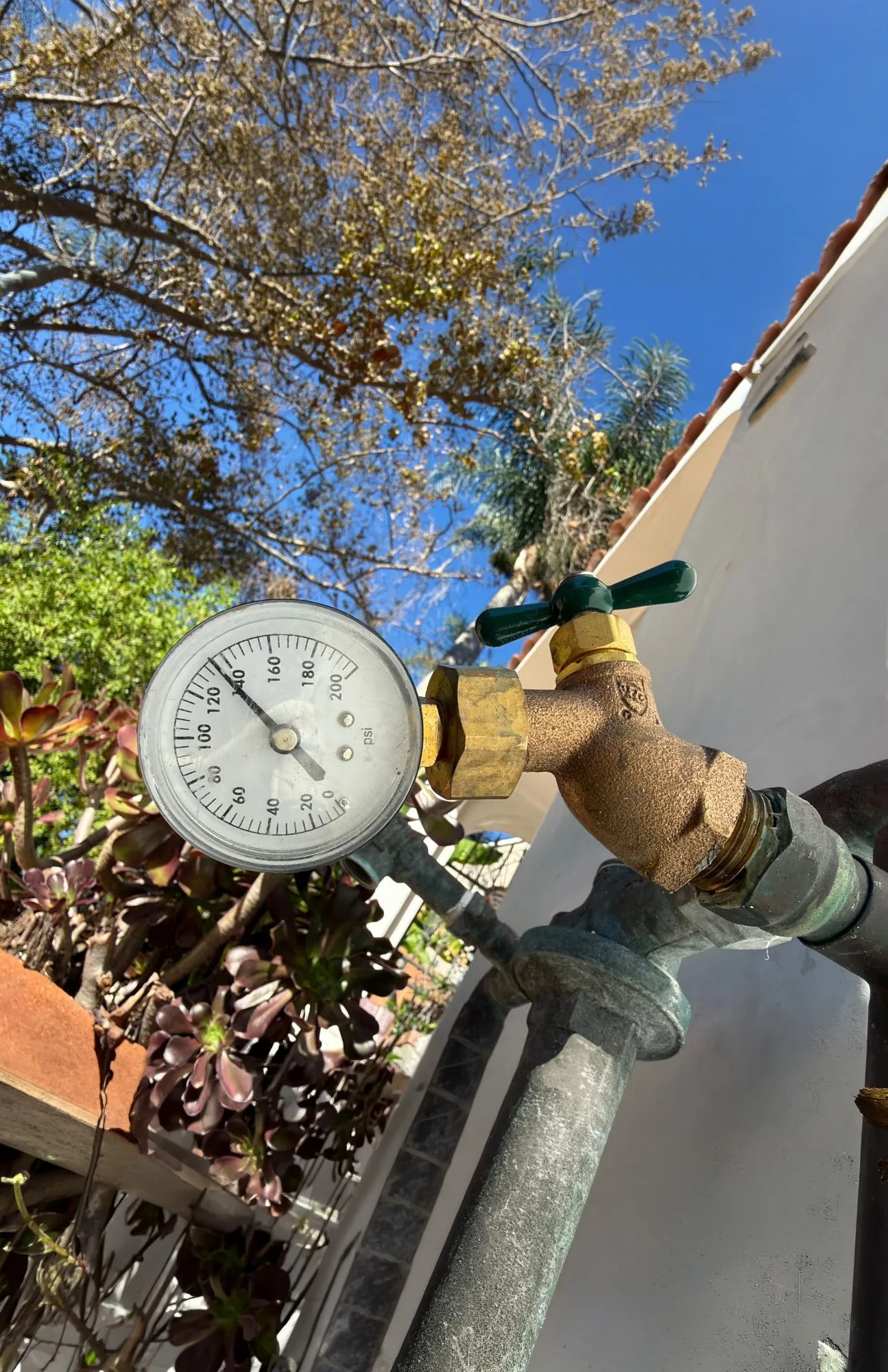
Is 135 PSI Too High for a House?

The pressure gauge shown in this photo indicates approximately 135 PSI.

For residential plumbing, water pressure generally should not exceed 80 PSI. When incoming pressure is higher, a properly functioning pressure reducing valve (PRV) is typically needed to bring it down to an appropriate level.

A reading as high as 135 PSI deserves further investigation.

What Happens When Water Pressure Is Too High?

Excessive pressure can affect several parts of your plumbing system.

Leaking faucets and fixtures: High pressure places additional stress on internal seals, cartridges, and connections, potentially causing premature leaks.

Toilet valve problems: Fill valves and supply connections may wear out faster when exposed to excessive pressure.

Water heater connections: High pressure can increase stress on water heater components and connected plumbing.

Pipe and fitting failures: Over time, excessive pressure can contribute to leaks at vulnerable joints and connections.

These problems don’t always happen immediately. Some develop gradually, making regular plumbing inspections especially valuable.

Why Is My Water Pressure So High?

Several conditions can cause excessive residential water pressure.

One common issue is a failing pressure reducing valve. The PRV is designed to regulate incoming water pressure before it reaches the home’s plumbing fixtures.

When the valve wears out, becomes improperly adjusted, or stops regulating correctly, pressure may rise beyond the intended level.

Some properties may also receive unusually high pressure directly from the municipal water supply.

A professional pressure test helps identify whether the issue is related to the incoming supply, the regulator, or another plumbing condition.

How Can You Check Your Water Pressure?

Homeowners can purchase an inexpensive water pressure gauge that connects to a compatible outdoor hose bib.

With other fixtures turned off, the gauge provides a basic static pressure reading.

If the reading exceeds 80 PSI, it’s worth having the plumbing system evaluated. Pressure can fluctuate, so additional testing may be needed to determine the cause.

Water Pressure Testing and PRV Replacement in West Los Angeles

Pacific Plumbing Team helps homeowners identify and resolve excessive water pressure through pressure testing, pressure regulator inspections, PRV replacement, and plumbing repairs.

We serve communities throughout West Los Angeles and the coastal corridor, including Redondo Beach, Manhattan Beach, Hermosa Beach, El Segundo, Culver City, Santa Monica, Venice, Brentwood, and Beverly Hills.

If your water pressure seems unusually strong, your fixtures keep developing leaks, or your pressure regulator hasn’t been checked in years, contact Pacific Plumbing Team to schedule an inspection.

A simple pressure check today could help prevent a much more expensive plumbing problem tomorrow.

Is Your Sump Pump Ready for the Rainy Season? A Helpful Guide for Los Angeles Homeowners

Southern California enjoys plenty of sunny days, which makes it easy to forget about the drainage systems that protect our homes during the winter.

One of those systems is the sump pump.

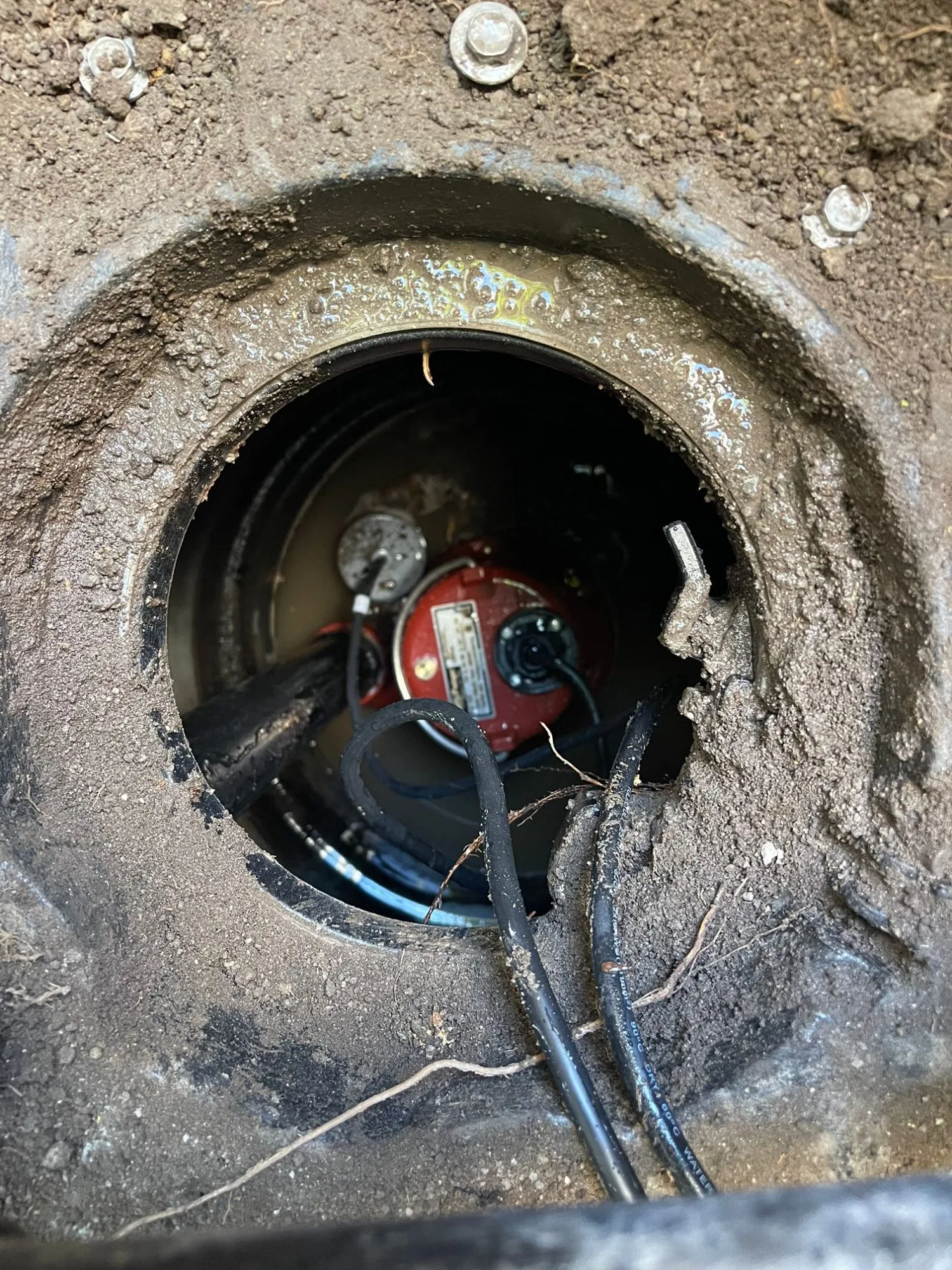
Usually installed in a pit below ground level, a sump pump helps remove collected water from basements, garages, and other areas where natural drainage may be limited.

While it may spend much of the year sitting quietly underground, keeping it in good working condition is an important part of seasonal home maintenance.

At Pacific Plumbing Team, we help homeowners and property managers throughout West Los Angeles prepare their plumbing and drainage systems for the rainy season.

Why Check Your Sump Pump Before Winter?

Los Angeles doesn’t experience heavy rain every day, but seasonal storms can bring substantial amounts of water in a relatively short period.

For properties with below-grade garages, basements, or underground drainage systems, a properly functioning sump pump can help manage water accumulation.

Like other mechanical equipment, sump pumps benefit from periodic inspections and maintenance.

Checking the system during dry weather gives homeowners time to address potential issues without the added inconvenience of an approaching storm.

Common Sump Pump Problems to Watch For

Over time, sump pumps can experience wear or develop operating problems.

Some of the most common issues include:

  • Stuck float switches: Debris or mechanical wear may prevent the pump from turning on or off at the correct water level.

  • Clogged pump intakes: Dirt and sediment can restrict water flow and reduce pumping performance.

  • Aging motors: Older pumps may become noisy, unreliable, or less efficient.

  • Blocked discharge pipes: Obstructions can prevent water from leaving the sump pit properly.

  • Electrical issues: Problems with power connections or electrical components can interrupt pump operation.

An inspection can help identify these conditions and determine whether maintenance, repair, or replacement is appropriate.

Five Simple Ways to Prepare Your Sump Pump for Rain

1. Take a Look at the Sump Pit

If the pit is safely accessible, visually check for excessive debris, leaves, or sediment.

Avoid reaching into the pit or handling electrical components.

2. Listen for Unusual Noises

A pump that suddenly sounds louder than usual, rattles, or makes grinding noises may need attention.

3. Watch the Water Level

Some standing water can be normal depending on the system design. However, unusually high water levels or water that doesn’t drain as expected may indicate a problem.

4. Check the Visible Discharge Outlet

Make sure the outlet is not blocked by leaves, dirt, or other debris and that discharged water has a suitable path away from the property.

5. Schedule a Professional Inspection

A plumbing professional can check the float switch, evaluate pump operation, inspect accessible piping, and recommend any necessary maintenance.

When Should You Consider Sump Pump Replacement?

A sump pump doesn’t necessarily need replacement simply because it’s several years old.

However, replacement may be worth considering if the pump frequently fails to start, operates inconsistently, makes unusual noises, or requires repeated repairs.

The best decision depends on the pump’s condition, capacity, age, and the drainage needs of the property.

A professional inspection can help determine whether the existing equipment is still suitable or whether a replacement would provide greater reliability.

Sump Pump Maintenance and Replacement in West Los Angeles

Pacific Plumbing Team provides sump pump inspections, troubleshooting, repairs, installation, and replacement for residential and applicable commercial properties.

Our service area includes Santa Monica, Venice, Marina del Rey, Culver City, Beverly Hills, West Los Angeles, Manhattan Beach, Redondo Beach, and nearby communities.

Whether your sump pump needs a routine inspection or you’re considering replacing an older unit, our team can help you understand your options.

Planning ahead for the rainy season? Contact Pacific Plumbing Team to schedule a sump pump inspection and make sure your drainage system is ready when you need it.

Don’t Wait for Leaks: Why Preventive Plumbing Maintenance Matters

Most homeowners rarely think about the water supply lines running beneath their floors. As long as the faucets work and the water pressure seems normal, everything appears fine.

But plumbing systems age even when they’re out of sight.

At Pacific Plumbing Team, we regularly encounter deteriorated valves, corroded pipe connections, and aging water supply lines hidden inside crawl spaces and other hard-to-reach areas.

A recent water supply repair provides a good example of why preventive plumbing maintenance is worth considering.

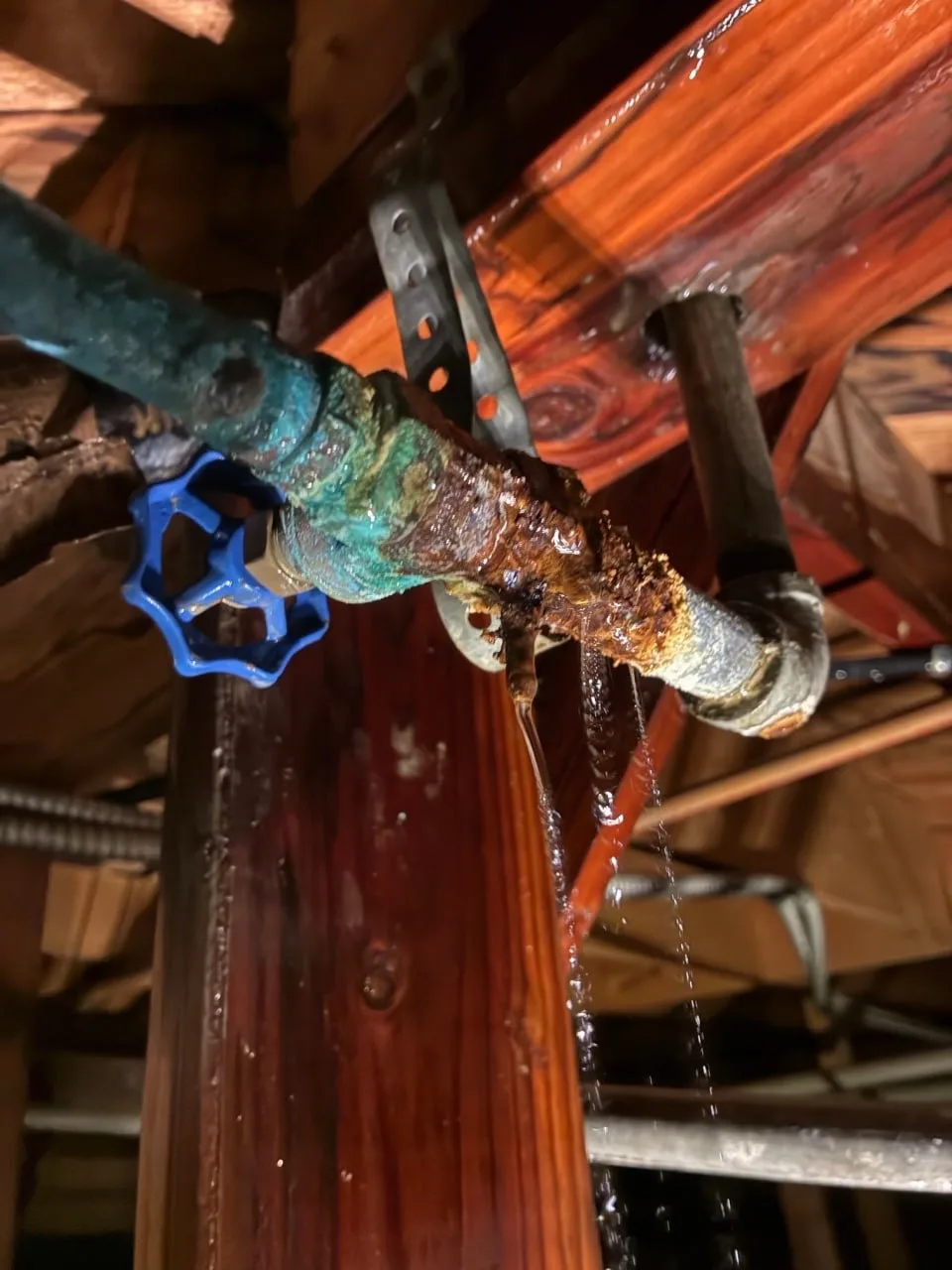
A Corroded Water Supply Line Hidden in a Crawl Space

During this project, our team worked on an aging water supply connection located beneath the home.

The existing plumbing included a deteriorated gate valve, corroded piping connections, and an older galvanized steel elbow.

The condition of the components required replacement rather than simply tightening an existing fitting.

Our technicians shut off the main water supply, drained the affected section, and carefully removed the deteriorated plumbing components.

We then installed a new brass threaded 90-degree elbow, a full-port ProPress ball valve, and new copper piping with the necessary adapters and fittings.

After reconnecting and securing the water supply line, we restored water pressure, checked the new connections for leaks, and verified proper valve operation.

Why Old Plumbing Connections Fail

Water supply pipes and fittings are exposed to years of pressure, temperature changes, and normal operating conditions.

Over time, some materials can deteriorate, particularly where older galvanized steel components remain in service.

Corrosion may weaken threaded connections, contribute to leaks, and make aging shutoff valves difficult to operate.

In crawl spaces, these problems can remain unnoticed because homeowners rarely inspect the plumbing beneath their houses.

By the time a leak becomes obvious, moisture may already have reached nearby building materials.

What Should Homeowners Look For?

Even without plumbing experience, homeowners can watch for several warning signs:

  • Visible rust or corrosion around exposed pipes and fittings

  • Moisture or water stains beneath plumbing connections

  • Unexplained drops in water pressure

  • Shutoff valves that are difficult to turn or fail to close completely

  • Unusual increases in water consumption

  • Musty odors or damp conditions in crawl spaces

These symptoms don’t always mean a major repair is necessary, but they deserve attention.

Why Replace an Old Gate Valve With a Ball Valve?

Older gate valves are common in residential plumbing systems, but their internal components can deteriorate or become difficult to operate over time.

Modern full-port ball valves provide straightforward quarter-turn operation and are commonly used for reliable water shutoff.

For this repair, our team installed a new ProPress ball valve along with copper piping and a brass elbow to replace the deteriorated components.

ProPress fittings use a mechanical press connection designed for compatible piping systems, allowing technicians to make secure connections without soldering.

Preventive Plumbing Maintenance Can Help Avoid Expensive Repairs

A plumbing inspection can help identify visible corrosion, aging valves, deteriorating pipe connections, and existing leaks before they develop into more serious problems.

Not every older pipe needs immediate replacement. The important thing is understanding the condition of the plumbing system and addressing components that are already showing signs of failure.

For homes with older galvanized plumbing, accessible crawl spaces, or a history of water leaks, periodic inspections can be particularly valuable.

Plumbing Maintenance and Water Line Repair in West Los Angeles

Pacific Plumbing Team provides residential plumbing inspections, water supply line repairs, copper pipe replacement, shutoff valve installation, and leak detection services.

We serve homeowners throughout West Los Angeles, Santa Monica, Venice, Marina del Rey, Culver City, Beverly Hills, Manhattan Beach, Redondo Beach, and nearby communities.

Whether you’ve noticed corrosion beneath your home or simply want to understand the condition of your plumbing, our team can help identify potential problems and recommend appropriate repairs.

Don’t wait for a small leak to become a major repair. Contact Pacific Plumbing Team to schedule a plumbing inspection or water supply line repair.

Sewer Line Relining: Repairing Underground Pipes Without Digging Up Your Yard

A damaged sewer line is bad enough. The thought of digging up your driveway, removing landscaping, or tearing through a beautiful yard can make the situation even more stressful.

Fortunately, not every sewer repair requires extensive excavation.

At Pacific Plumbing Team, we offer trenchless sewer line repair options, including sewer pipe lining, for qualifying underground sewer systems throughout Los Angeles and the Westside.

What Is Trenchless Sewer Lining?

Trenchless sewer lining, also known as cured-in-place pipe lining (CIPP), is a method of rehabilitating an existing sewer pipe without replacing the entire underground line through an open trench.

A specialized liner is inserted into the existing pipe and cured to form a new, durable interior pipe surface.

The result is a rehabilitated sewer line with significantly less surface disruption than conventional excavation in suitable applications.

Why Homeowners Choose Sewer Relining

Imagine discovering that your sewer pipe runs underneath a concrete driveway, landscaped backyard, or walkway.

Traditional replacement might require excavating those areas to reach the damaged pipe.

Trenchless sewer lining can offer several advantages:

  • Less excavation: Many projects can be completed using existing access points or limited access openings.

  • Preserved landscaping: Reduce the need to disturb established plants, patios, and walkways.

  • Reduced disruption: Avoid some of the extensive demolition and restoration associated with conventional replacement.

  • Long-term rehabilitation: Properly installed lining systems are designed to provide a durable new interior pipe surface.

  • Targeted repairs: A sewer camera inspection helps identify damaged sections and determine the appropriate repair method.

When Does a Sewer Line Need Repair?

Sewer problems often develop gradually.

You might notice a toilet that backs up repeatedly, several drains running slowly, unpleasant sewer odors, or the same blockage returning shortly after drain cleaning.

Common causes include tree root intrusion, aging cast iron pipes, cracked sewer lines, and deteriorating pipe joints.

While drain cleaning may restore flow temporarily, it doesn’t necessarily correct structural damage inside the pipe.

That’s why understanding the condition of your sewer line is so important.

Is Sewer Relining Always Possible?

No. And that’s an important distinction.

Trenchless sewer lining requires the existing pipe to meet certain structural and installation conditions.

Severely collapsed pipes, major misalignment, or other significant defects may require a different repair approach.

Before recommending a solution, our team can perform a sewer camera inspection to evaluate the condition of the line.

The goal isn’t to sell one particular repair method. It’s to find the right solution for the actual problem.

Professional Sewer Line Repair in West Los Angeles

Whether you’re dealing with an older sewer system, recurring blockages, or a damaged underground drain line, Pacific Plumbing Team can help you understand your options.

Our plumbing services include sewer camera inspections, drain cleaning, sewer line repairs, and trenchless sewer rehabilitation.

We serve Santa Monica, Venice, Marina del Rey, Culver City, Beverly Hills, West Los Angeles, Manhattan Beach, Redondo Beach, and surrounding communities.

Concerned about your sewer line? Contact Pacific Plumbing Team to schedule an inspection and find out whether trenchless sewer lining is right for your property.

Tree Roots in Sewer Line | Drain Cleaning in West Los Angeles

That’s Not a Pile of Yard Waste

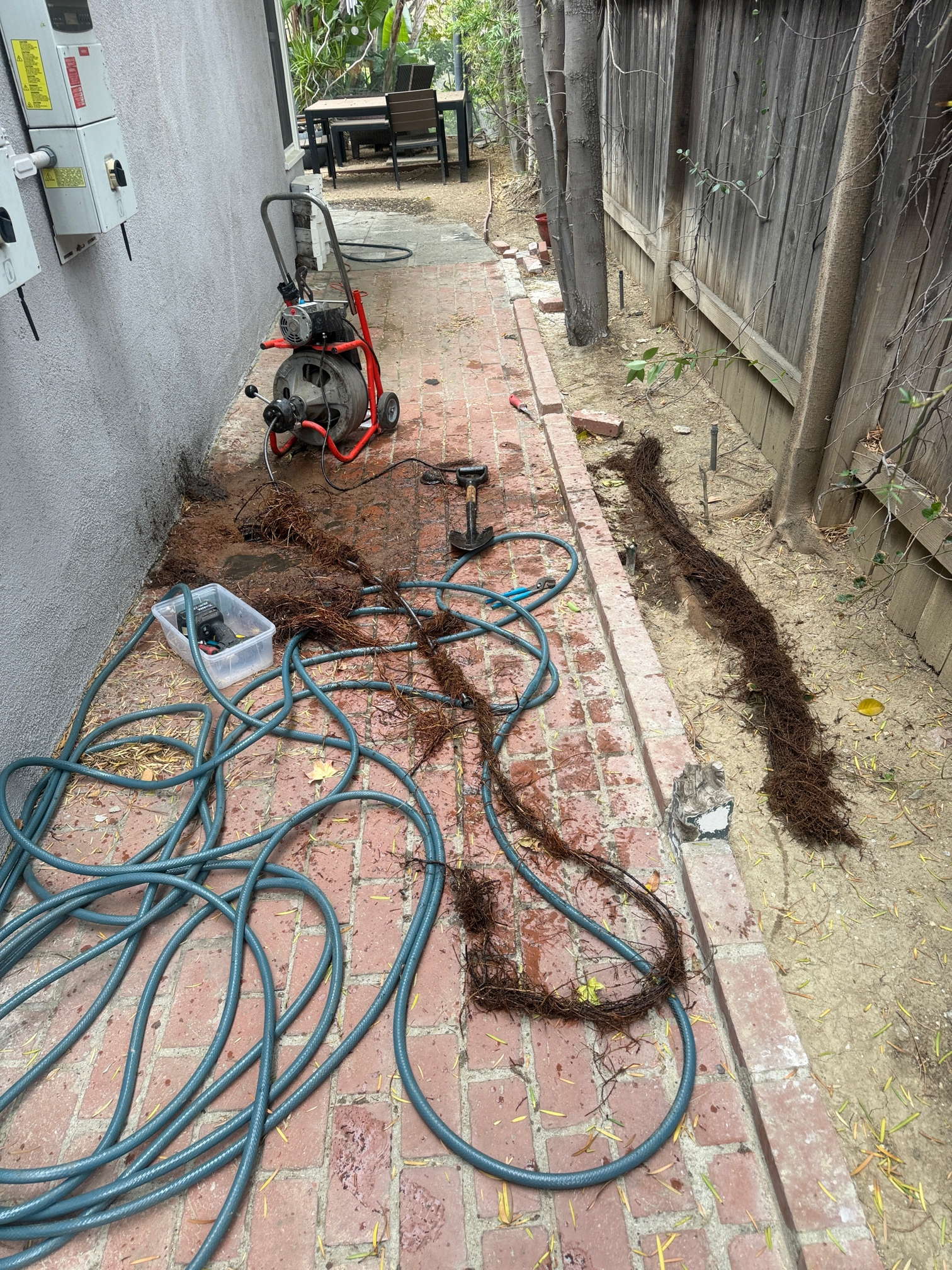
Take another look at the photo. All those tangled roots scattered across the walkway came out during a sewer cleaning job.

It’s surprising how much root growth can end up inside an underground drain pipe.

Most homeowners never think about tree roots when their bathroom sink drains slowly or their toilet starts backing up. But roots are a common cause of recurring sewer problems, especially around older properties with mature trees.

At Pacific Plumbing Team, we help homeowners across West Los Angeles find and clear stubborn sewer blockages, including those caused by root intrusion.

How Do Tree Roots Get Inside Sewer Pipes?

Tree roots naturally grow toward sources of moisture. Underground sewer pipes can attract them, especially when a pipe has a small crack, damaged joint, or another opening.

Once a root finds its way inside, it can continue growing. Over time, the roots form a tangled mass that catches toilet paper, grease, and other debris traveling through the sewer line.

Eventually, wastewater has less room to pass through.

What starts as an occasional slow drain can turn into a recurring blockage or a complete sewer backup.

Why Does My Sewer Keep Clogging?

If you’ve had your sewer cleaned more than once and the problem keeps returning, there’s probably a reason.

Sometimes the issue isn’t just accumulated waste. It could be roots growing through a damaged section of pipe.

Common warning signs include:

  • Multiple drains running slowly at the same time

  • Toilets frequently clogging or backing up

  • Gurgling sounds coming from drains

  • Wastewater backing up into showers or tubs

  • Sewer clogs that return shortly after cleaning

These symptoms don’t automatically mean you have tree roots, but they are good reasons to have your sewer line inspected.

Removing Tree Roots From a Sewer Line

For this project, our team used professional drain cleaning equipment to remove a substantial amount of root growth from the sewer pipe.

As the photo shows, roots can form long, dense tangles inside underground plumbing.

Mechanical sewer cleaning can remove roots and restore an opening for wastewater to flow. However, removing the roots doesn’t necessarily repair the opening that allowed them into the pipe.

That’s an important distinction.

If roots entered through a cracked pipe or deteriorated joint, they may eventually grow back.

When Is a Sewer Camera Inspection Necessary?

A sewer camera inspection helps determine what’s happening inside the pipe without immediately digging up the yard.

Using specialized inspection equipment, a plumber can examine the sewer line for root intrusion, cracks, offsets, damaged joints, and other conditions that may contribute to recurring blockages.

Depending on the condition of the pipe, the next step might be additional cleaning, a targeted sewer line repair, or replacement of a damaged section.

The goal is to understand the problem before recommending unnecessary work.

Sewer Cleaning and Root Removal in West Los Angeles

If your sewer keeps clogging, it’s worth finding out why instead of repeatedly dealing with the same backup.

Pacific Plumbing Team provides sewer drain cleaning, tree root removal, sewer camera inspections, and sewer line repair services.

We serve homeowners in West Los Angeles, Santa Monica, Venice, Culver City, Marina del Rey, Beverly Hills, Manhattan Beach, Redondo Beach, and surrounding communities.

Dealing with recurring sewer backups? Contact Pacific Plumbing Team to schedule an inspection or professional drain cleaning.

Double Vanity Sink & Faucet Installation in West Los Angeles

Two Sinks Make Mornings Easier

If you’ve ever shared a bathroom with someone who’s getting ready at the same time, you probably understand why double vanities are so popular.

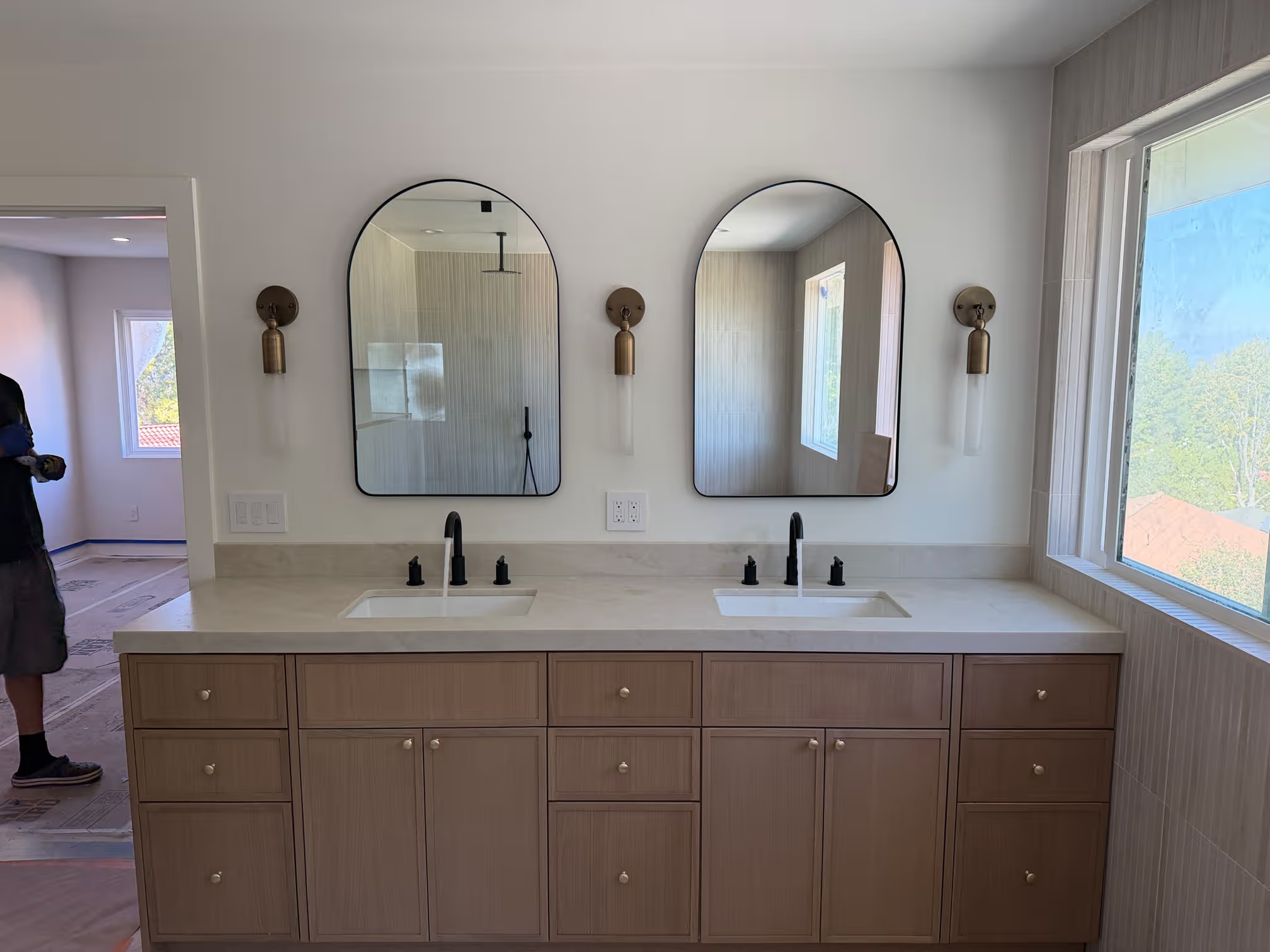
Here’s a look at a bathroom project featuring two undermount sinks, matching matte black faucets, and a beautiful natural wood vanity. We especially like how everything works together without making the bathroom feel too busy.

It’s a clean, simple design, but also a really practical one.

The Plumbing Behind a Beautiful Bathroom

When people think about remodeling a bathroom, they usually picture the finished countertops, cabinets, mirrors, and fixtures.

We think about what’s happening underneath the sinks, too.

Every faucet needs a reliable water supply, and every sink needs properly connected drainage. A small leak inside a vanity cabinet can go unnoticed for a long time, especially when everything looks perfect from the outside.

That’s why proper sink and faucet installation matters.

At Pacific Plumbing Team, we work on everything from simple bathroom faucet replacements to plumbing connections for new double vanities.

Thinking About Adding a Second Sink?

Adding another sink can be a great upgrade, but it’s worth checking the existing plumbing before purchasing a new vanity.

Depending on the bathroom layout, the water supply and drain connections may need to be modified to accommodate two sinks.

And if you’re keeping your existing vanity, sometimes replacing old faucets or fixing troublesome drain connections is all you need to make the bathroom feel better.

Not every improvement requires a complete remodel.

Bathroom Plumbing Services in West LA

We help homeowners with bathroom sink installation, faucet replacement, leaking drains, vanity plumbing, and other bathroom plumbing repairs.

Pacific Plumbing Team serves West Los Angeles, Santa Monica, Venice, Culver City, Marina del Rey, Beverly Hills, Redondo Beach, and surrounding communities.

Whether you’re planning a new bathroom or finally getting around to fixing that dripping faucet, we’re here to help.